The Parish Church Exterior

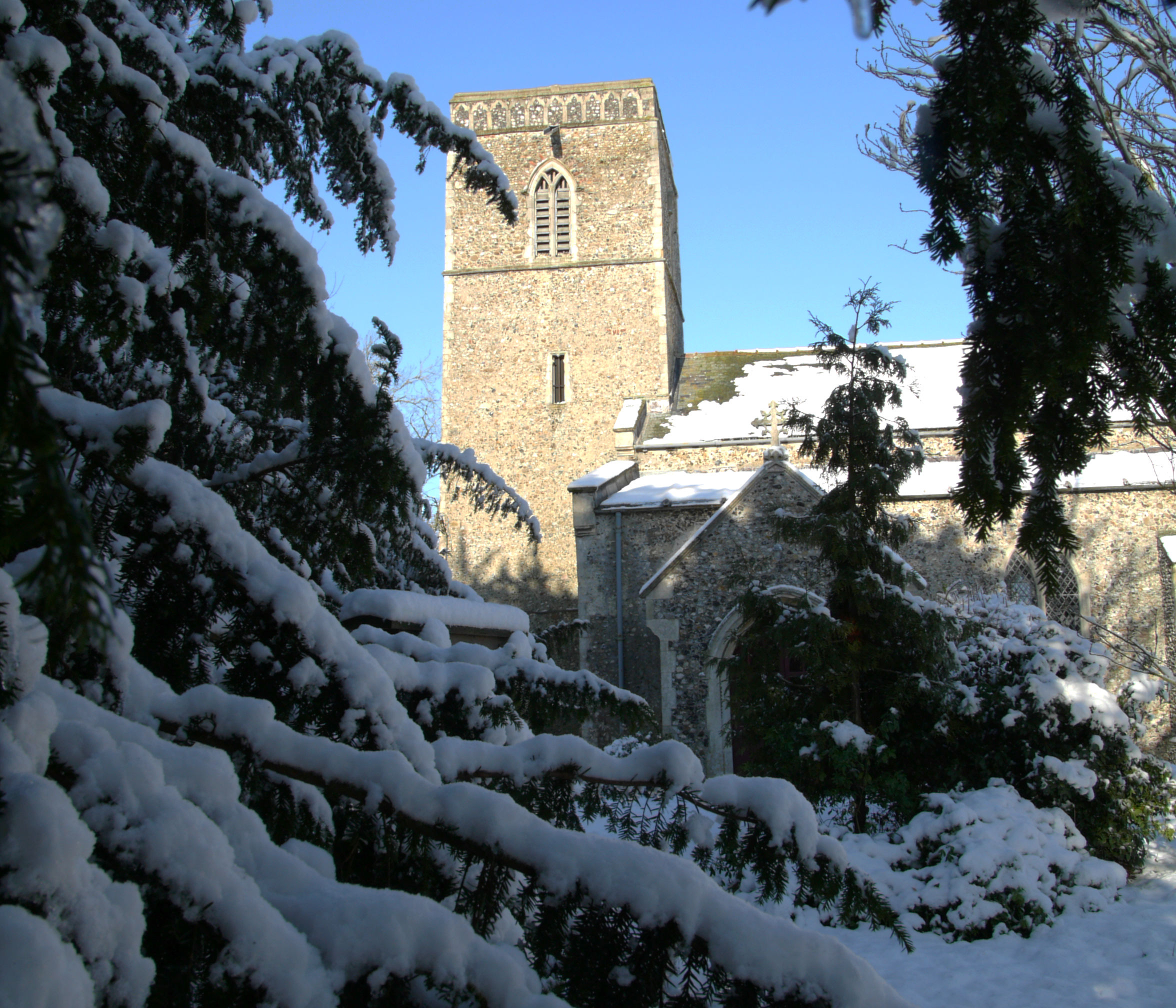
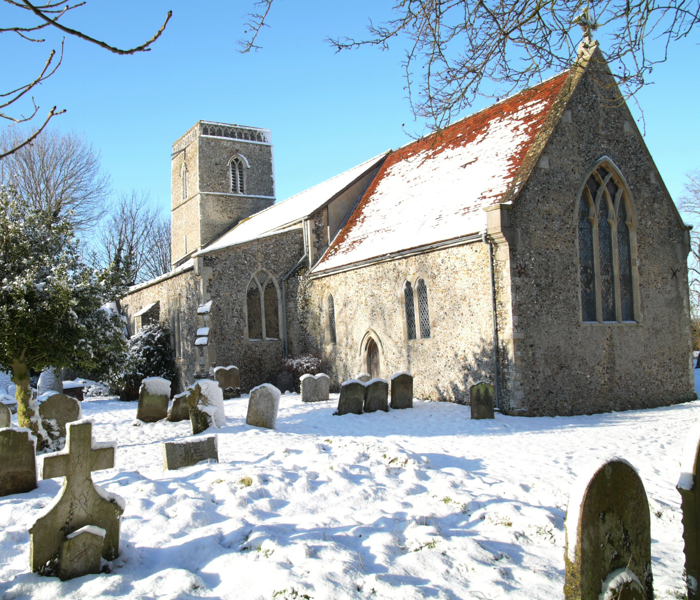
The church has a sequestered and idyllic SETTING, along a short lane from The Street, beside the old school, built in 1860 and with the initials carved in stone of Sir Robert Shafto Adair who gave it. Rising from its green, tree-shaded churchyard rise the flint-rubble walls of the parish's oldest building by far, which is still in active use as a nucleus of Christian worship and witness, the purpose for which it was built some 900 years ago.
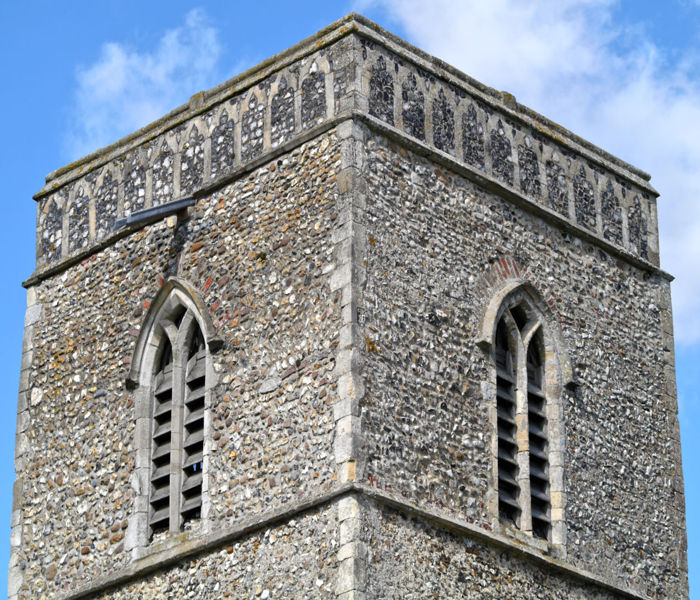
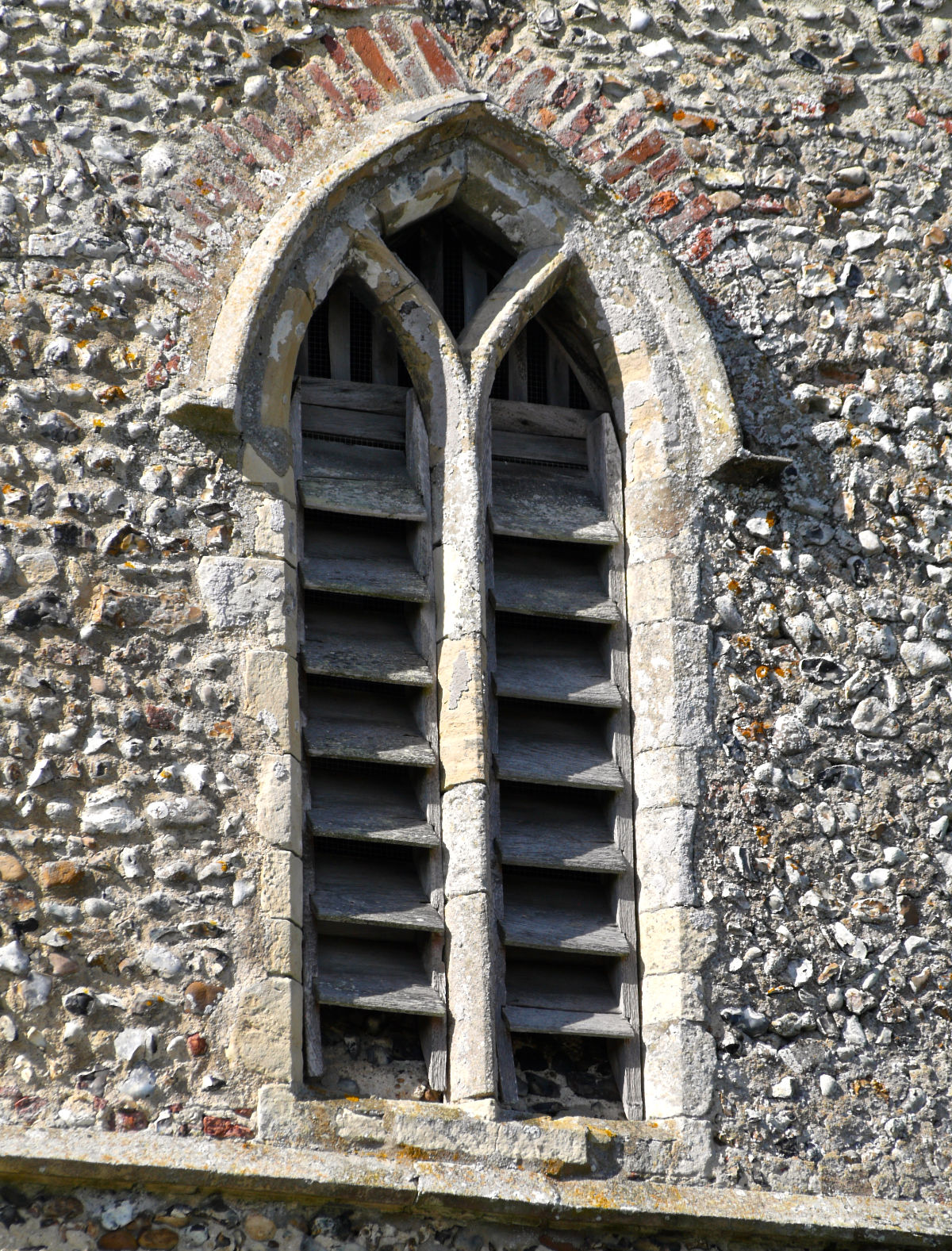
The simple unbuttressed western TOWER grew during the years around 1300, and two-light 'Y' traceried windows allow the four bells to sound across the parish. The plain parapet, with its simple flint and stone flushwork, was added a century later. The keen eye will detect the bases of former pinnacles at the centre of each face. Kelly's Directory in 1879 stated that 'from the summit eastward may be seen vessels at sea, northward Poringland and the neighbourhood of Norwich, and westward, Euston Park, near Thetford'. Hard to believe - but it was considered publishable! In the north wall of the NAVE we see some of the church's earliest workmanship, in the masonry of the lower half of the wall, where the flints are set in rough horizontal layers - a sign ofwork of the 1100s or earlier.
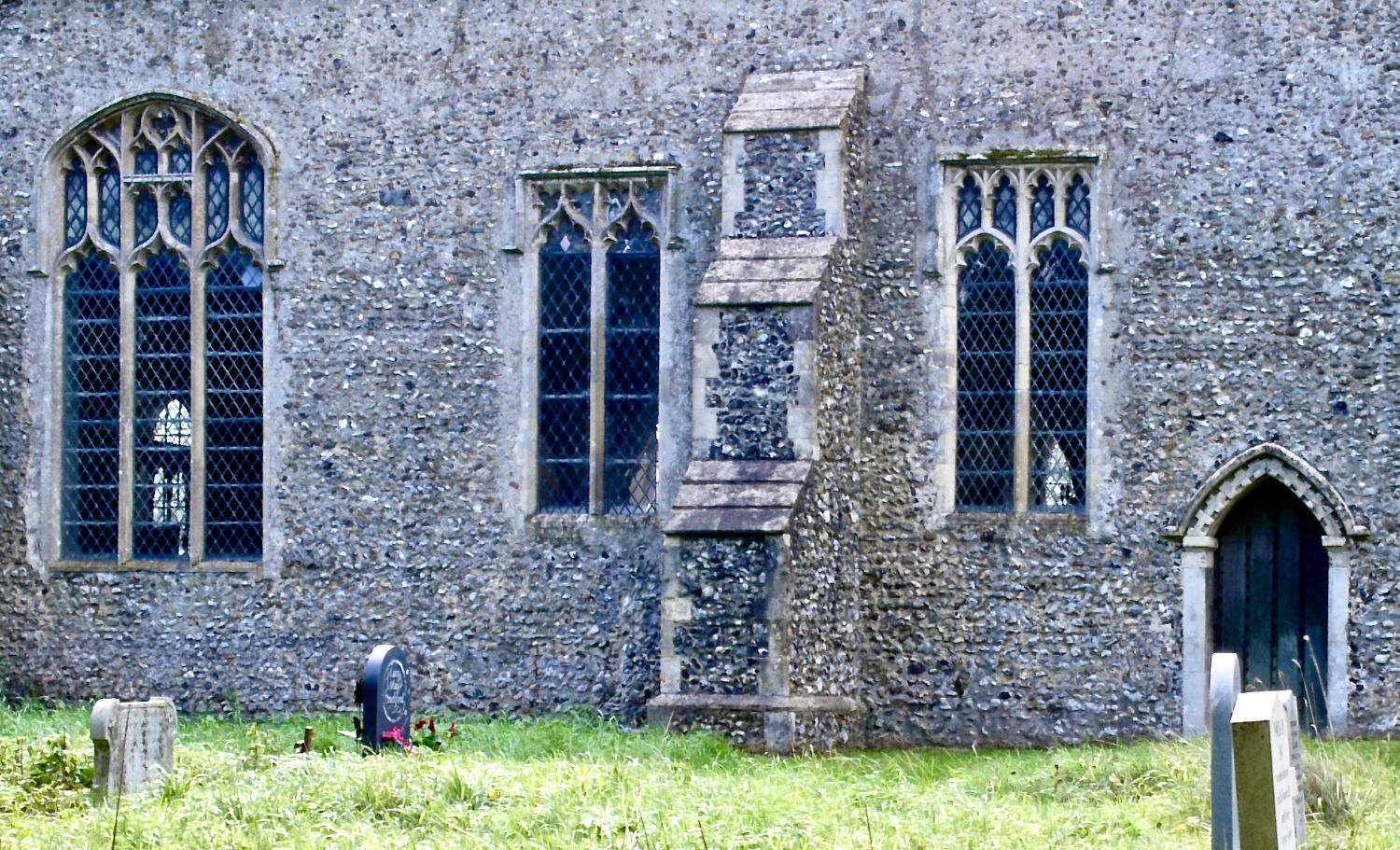
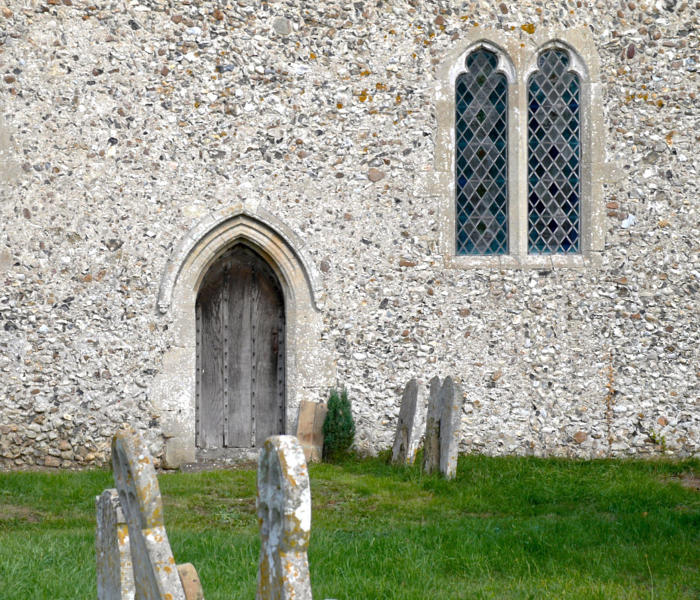
The north doorway is an interesting architectural mystery. Its pointed arch is embellished with Norman billet-moulding and rests upon Norman-style imposts, yet the stonework of the jambs (sides) is later and the arch, which hasn't the usual gothic curve, looks to be reconstructed.The pair of double windows may date from c.1400, whilst the elegant three-light window arrived later in the 15th Century.
The small single 'lancet' windows in its north and south walls date the CHANCEL to the 1200s, its three-light east window, south-east window and priest's doorway being added c.1300. In the stonework on the south side of the priest's doorway are faint traces of a MASS DIAL, which enabled that priest to calculate the start of services before the days of clocks.
The SOUTH AISLE is lit by two 'Y' traceried windows of c.1300 and two square- headed Perpendicular windows of c.1400.
The SOUTH PORCH, by which we enter needed much restoration in 1874, when its outer entrance arch and windows were renewed. The 14th century inner entrance arch however is original. It contains an exquisitely-carved door, made in the village in 1924 in memory of Alfred and Sarah Cunningham of nearby Church Farm. The Holy Water stoup nearby is set beneath a graceful trefoil-headed arch, embellished with leaf-crockets and crowned with a finial. Here mediaeval worshippers dipped their fingers in Holy Water and made the Sign of the Cross as an act of symbolic cleansing and rededication upon entering the sacred building.
Most of the material in this section comes from the excellent monograph on St James Church South Elmham by Roy Tricker BEM (© Roy Tricker 2023). We are grateful for his kind permission to reproduce it here.