St James South Elmham: Notes from a Small Village
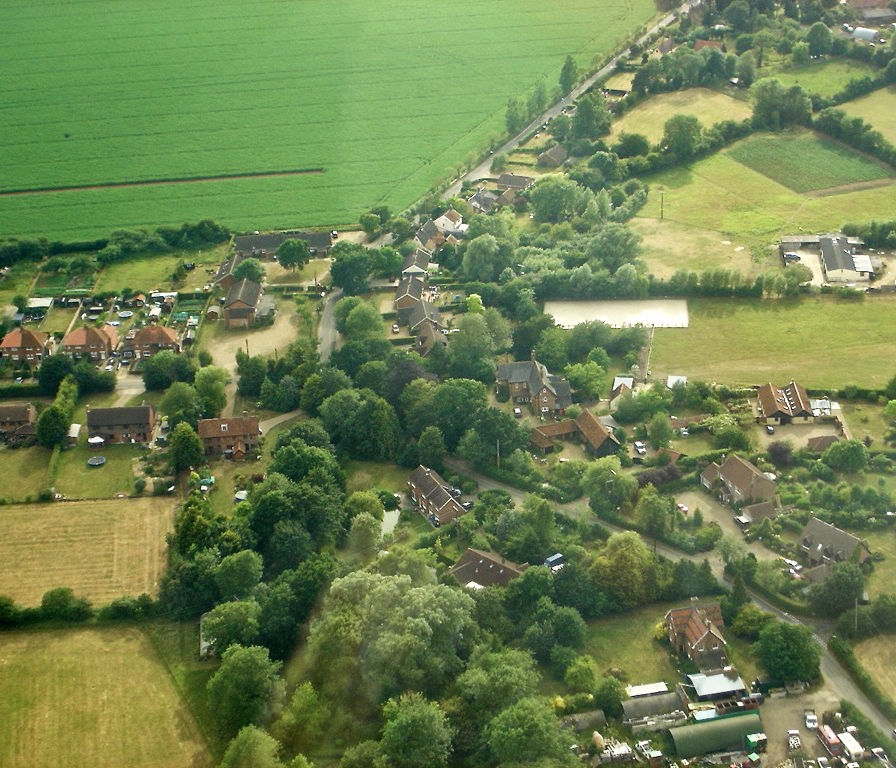
St James South Elmham, often St James or sometimes St James SE, sits out on a limb, an ancient and deeply rural village. It is set away from the other Saints parishes with houses ancient and modern tucked in among the trees. The climb up to it is gentle and steady but it is the highest parish above sea level in East Suffolk. Agriculture is at the core of village life and still comes right to its centre. Nowadays, the very high-speed broadband service supports our farming and many other activities, services and businesses besides.
The South Elmham parishes, together with nearby Flixton and Homersfield, made up the deanery and township given to the Bishops of Dunwich who evangelised this part of Suffolk; subsequent Bishops of East Anglia held all the South Elmham deanery manors. An area known as St James’ Park in the south of the parish was the deer park which was still used by the Bishops of Norwich in the 12th and 13th centuries. The Anglo-Saxon parts of St James church are evidence of much earlier village roots .
The life and history of St James South Elmham are reflected in it, unusually, having two different village signs. The one shown here, and found at the east end of the village, shows a large scallop shell, the emblem of St James, at the top of a tall wooden post with the village name set in the brick base.
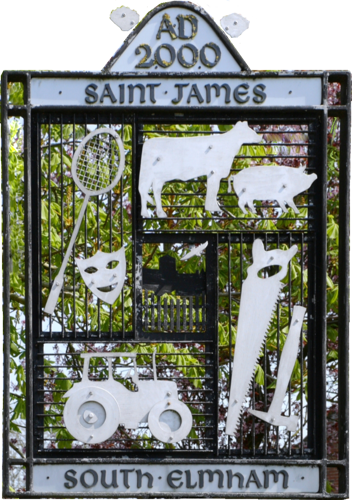
The second sign shown at the top left corner above, and installed at the west end of the village, frames village life surmounted by three scallop shells. The cow and pig give an indication of the farming livestock and dairy farms, with the tractor at the bottom representing arable farming. The badminton racquet and theatre mask relate to the village hall and recreation ground. In the centre is the church and the old school behind a fence. The fence represents the local legend of the cuckoo. The saw and hammer represent trades in the parish, past and present.
The Gilded Cuckoo
According to local tradition, the people of St James believed that if they could keep the cuckoo from flying away, they could keep its song for themselves and capture the essence of spring forever. To do this, they tried to build a fence around a bush where a cuckoo was perched. The effort failed because, as the story goes, the fence was just one layer too low, allowing the cuckoo to fly over the top and escape. The Church once had a series of wooden panels showing a blacksmith, carpenter, wheelwright etc trying to build a hedge round a cuckoo sitting on top of a bush, to trap it and keep its song. Not far from the Church is Cuckoo Farm, claimed as further proof of the story.
Source: R. H. Mottram: 'East Anglia' (Chapman & Hall, 1933), p.226
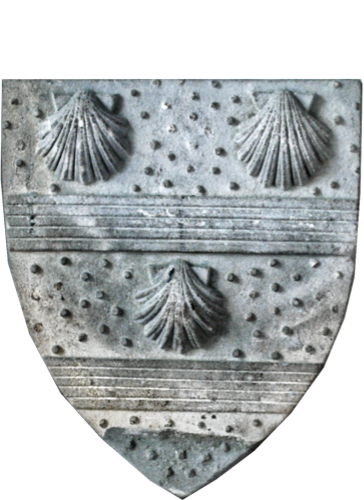
The heraldic image at the top right of the screen shows a stone shield crossed by two bars and with three scallop shells. This is set into the wall inside the church close to the altar and again highlights the link to St James. The patterns in the stone represent colours of a painted version: the ‘beaded’ background would be gold, the lines in the bars indicate blue. The shells would be white. The project for the creation and installation of these two signs is described in more depth here.
The Devil's Escape
The Devil crept into the church of St. James during harvest time many years ago but was seen by some children who raised the alarm. The harvesters cornered him with their pitchforks in either the porch or the base of the squat Norman tower and kept him at bay till the priest arrived. When he came, amid the pealing of bells and the chanting of prayers, the Devil let out a shriek, tore a hole through the wall and fled back to Hell. The black sooty marks that scorched the flintwork were washed away, but the plastered-over hole in the wall is still said to be there.
Source: R. H. Mottram: 'East Anglia' (Chapman & Hall, 1933), p.226.